

Brands are living systems. They are not fixed identities that can be created once and left untouched forever. A brand reflects the relationship between a company, its customers, its market, and the culture surrounding it. As businesses grow, audiences change, technologies develop, and industries transform, brands must evolve to remain relevant.
However, brand evolution is often misunderstood. Many companies assume that updating a brand means changing a logo, choosing new colors, or creating a modern-looking website. While visual improvements can be part of the process, true brand evolution goes much deeper. It is about making sure that the way a company presents itself still matches what it offers, who it serves, and where it wants to go.
A brand that no longer reflects reality creates friction. Customers may struggle to understand the company’s value. Marketing messages become less effective. Sales teams spend more time explaining what the business does. Employees become uncertain about how to communicate the brand. Over time, these small problems accumulate and limit growth.
The challenge for modern businesses is finding the right moment to evolve. Changing too early can waste valuable resources and remove important market signals. Waiting too long can create brand debt — a situation where outdated positioning, inconsistent communication, and unclear messaging make future growth more difficult.
In 2026, brand evolution has become even more important because brands are no longer discovered only through websites, advertisements, or physical experiences. Customers increasingly encounter brands through search engines, artificial intelligence assistants, recommendation systems, social platforms, and digital communities.
A successful modern brand must be understandable not only to people but also to the systems that help people discover information.
What Brand Evolution Really Means in 2026
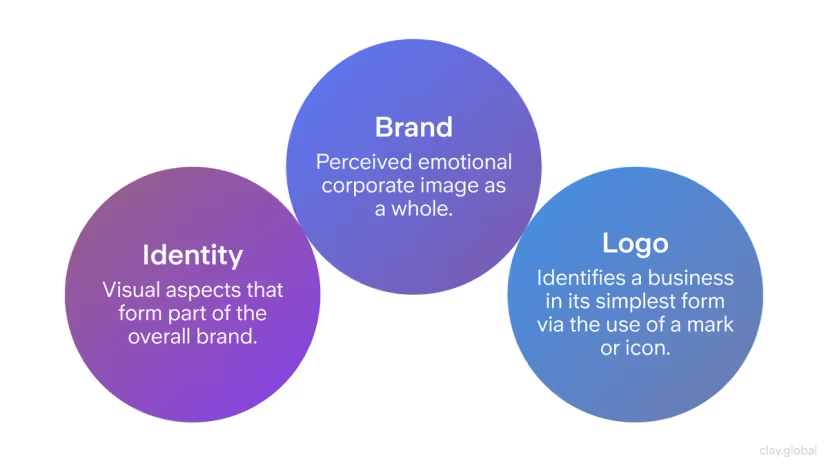
Brand evolution exists between two extremes. On one side is a simple refresh — small visual updates that improve the appearance of an existing identity. On the other side is a complete rebrand involving a new name, new positioning, new strategy, and a completely different market perception.
Most companies do not need either extreme.
In many cases, the right solution is strategic evolution: improving how the brand communicates while preserving the valuable elements that already exist.
Brand evolution may involve refining the company’s positioning, updating messaging, improving customer experience, redesigning visual elements, adjusting the tone of voice, or creating a stronger connection between the brand and its audience.
The goal is not to replace the brand. The goal is to make it stronger.
A successful evolution protects brand equity while allowing the company to adapt to new opportunities.
For example, a startup may initially build its identity around being innovative and experimental. This approach can work well during the early stages when attracting attention is the priority. However, as the company grows, customers may need more clarity, trust, and structure. The same identity that helped the company gain visibility may eventually limit its ability to scale.
Brand evolution allows companies to mature without losing their original personality.
Another important change in 2026 is the way brands are interpreted. A company is no longer defined only by what it says about itself. Search engines, AI platforms, customer reviews, social conversations, and online references all contribute to brand perception.
This means clarity has become a strategic advantage. Brands with clear positioning, consistent messaging, and strong semantic connections are easier for both people and technology systems to understand.
Why Brands Need to Evolve
The strongest brands are not those that never change. They are the ones that know how to change while maintaining their identity.
Many companies begin considering evolution only after experiencing problems. They notice declining engagement, weaker conversion rates, customer confusion, or increasing competition. However, brand challenges usually develop slowly.
A brand rarely becomes outdated overnight. Instead, small gaps appear between what the company is and how the audience perceives it.
Growth Changes What a Brand Needs
One of the biggest reasons companies evolve their brands is growth.
Early-stage companies usually build brands around speed, experimentation, and flexibility. Their messaging may be broad because they are still discovering their market position.
As the company grows, those same characteristics can become weaknesses.
A larger company needs clearer communication, stronger systems, and a more defined identity. Customers need to quickly understand what the company offers and why it matters.
A business that started as a simple product may eventually become a complete platform. If the brand continues communicating only the original product, customers may not recognize the company’s full value.
This creates a disconnect between business reality and brand perception.
A company can grow significantly while its brand remains stuck in the past. When this happens, evolution becomes necessary.
Markets Change Faster Than Ever
Modern industries move at an incredible speed. New technologies appear, customer expectations shift, and entire categories can transform within a few years.
This is especially visible in industries such as artificial intelligence, fintech, SaaS, crypto, and digital services.
A company that was considered innovative five years ago may appear outdated today if its positioning does not reflect current market expectations.
Brand evolution helps companies remain competitive by ensuring that their message continues to match the environment around them.
The key is not following every trend. The strongest brands do not constantly reinvent themselves based on temporary changes. Instead, they adapt strategically while maintaining their core purpose.
Customer Expectations Are Higher
Customers today expect immediate clarity.
People rarely spend time trying to understand confusing brands. If a website does not explain its value quickly, if messaging feels generic, or if the experience feels inconsistent, customers often move to competitors.
A strong brand removes uncertainty.
It communicates clearly what the company does, who it helps, and why it deserves attention.
Brand evolution helps eliminate unnecessary friction and creates a smoother customer journey.
The Most Important Signs That Your Brand Needs Evolution
Knowing when to evolve a brand is one of the most difficult decisions businesses face. The signs are not always visual. In many cases, the strongest indicators appear in business performance.
Your Positioning Has Become Difficult to Explain
One of the clearest signs of brand misalignment is confusion around positioning.
If employees, customers, or partners struggle to describe what your company does, your brand likely needs refinement.
This often happens when businesses expand their products or services without updating their communication strategy.
A company may start with one clear offering but later add multiple solutions. Without strategic adjustment, messaging becomes complicated.
Instead of communicating one strong idea, the brand attempts to explain everything at once.
The result is usually a weaker impression.
Strong brands are not necessarily those that say more. They are those that communicate the right message clearly.
Conversion Rates Begin to Decline
A drop in conversions is not always caused by pricing, product quality, or technical problems.
Sometimes the issue is perception.
Customers may visit a website but fail to understand the value. They may like the product but lack confidence in the company. They may not see why one brand is different from another.
Brand evolution can solve these challenges by improving positioning, messaging, and customer trust.
When people immediately understand the value of a brand, decision-making becomes easier.
You Are Attracting the Wrong Audience
A strong brand should attract the right customers.
When marketing efforts generate leads that do not match the ideal customer profile, the problem may not be the campaign itself. The brand may simply be communicating the wrong signals.
For example, a company that wants to attract enterprise customers but still presents itself like a small beginner-focused startup may struggle to reach its intended audience.
Brand evolution helps realign perception with business goals.
Your Brand Feels Outdated Internally
Sometimes employees recognize the need for change before customers do.
When teams create their own versions of messaging, use different descriptions of products, or feel uncomfortable presenting the brand, it indicates internal misalignment.
A strong brand should make communication easier, not harder.
Employees should understand the company’s purpose, personality, and value proposition.
Internal clarity always influences external perception.
Competitors Are Easier to Understand
Competition is not only about having better products. It is also about communicating value more effectively.
A competitor does not necessarily need to be better to win attention. Sometimes they simply explain themselves more clearly.
If another company can communicate its advantage in one sentence while your brand requires a long explanation, that is a strategic warning sign.
Brand evolution helps companies create sharper positioning and stronger differentiation.