

In today’s highly competitive digital world, building a successful business is no longer only about offering a great product or service. Companies compete for attention, trust, and emotional connection. Customers have more choices than ever before, and the brands that succeed are those that create a clear identity, communicate meaningful values, and build experiences that people remember.
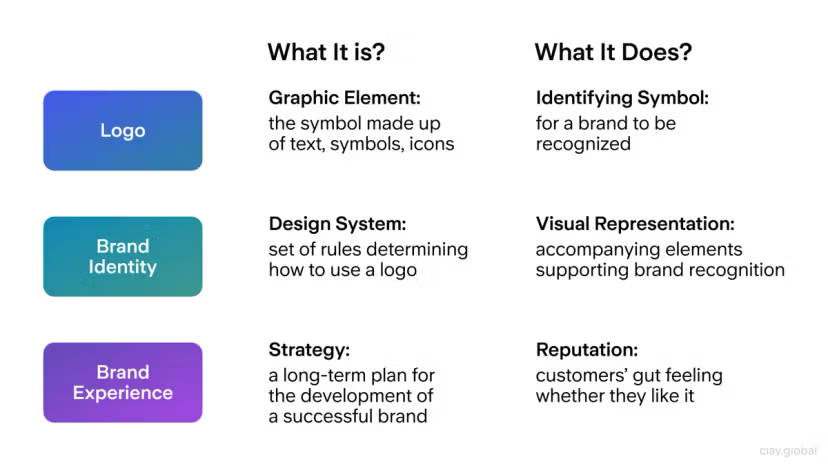
This is where brand strategy becomes essential. A strong brand strategy is not simply a logo, a color palette, or a marketing campaign. It is a long-term framework that defines how a company presents itself, how it communicates with its audience, and how it creates value in the minds of customers.
A well-developed brand strategy helps businesses create a recognizable presence, differentiate themselves from competitors, and build relationships that go beyond individual purchases. It connects business goals with customer expectations and creates a foundation for sustainable growth.
In 2026, branding has become even more complex. Companies must navigate changing consumer behavior, digital transformation, artificial intelligence, social media evolution, and growing demand for authenticity. Brands are no longer judged only by what they sell but also by what they represent, how they communicate, and how they make people feel.
A successful brand strategy brings together research, positioning, storytelling, design, customer experience, and innovation to create a consistent and memorable brand presence across every platform.
What Is Brand Strategy?
Brand strategy is a comprehensive plan that defines how a business builds, manages, and develops its identity over time. It explains who the brand is, what it stands for, who it serves, and why customers should choose it instead of competitors.
Unlike short-term marketing activities focused on immediate sales, brand strategy focuses on long-term perception. It helps businesses create a unique position in the market and establish a strong emotional connection with their audience.
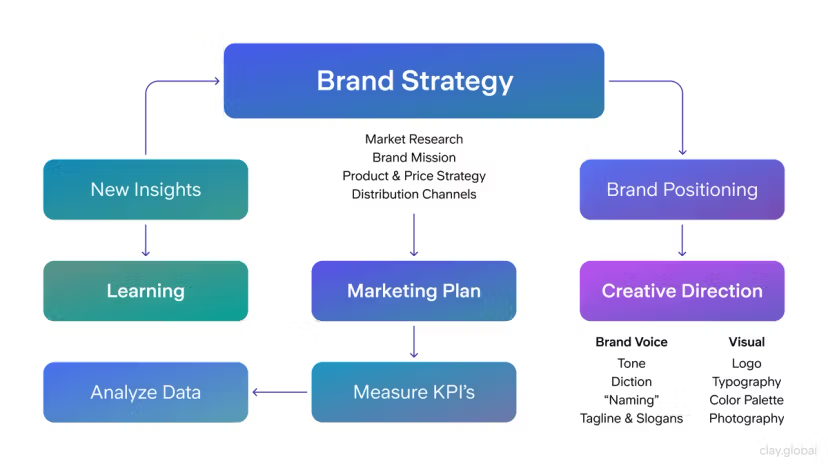
Professional branding services usually include several interconnected areas, such as brand research, market analysis, positioning, visual identity development, messaging strategy, and digital brand implementation. Together, these elements create a unified system that allows businesses to communicate clearly and consistently.
A strong brand strategy begins with understanding the company’s mission, values, goals, and audience. Before creating visual elements or promotional campaigns, businesses need to answer important questions: What problem does the brand solve? What makes it different? What emotions should customers associate with it? What kind of relationship does the company want to build with its audience?
The answers to these questions become the foundation of the brand.
Modern brand strategy also plays a crucial role in digital branding. Websites, social media channels, online advertisements, mobile experiences, and content platforms all influence how people perceive a company. Without a clear strategy, brands often create inconsistent messages that confuse customers and weaken recognition.
A successful brand ensures that every interaction — from the first website visit to customer support communication — reflects the same personality, values, and promise.
Why Brand Strategy Is Essential for Business Growth
Brand strategy is one of the most important investments a company can make because strong brands create value far beyond their products or services.
A recognizable brand helps businesses attract customers, build trust, increase loyalty, and compete more effectively. When people understand what a brand represents and feel connected to its message, they are more likely to choose it repeatedly.
One of the biggest advantages of effective branding is emotional connection. Customers rarely make decisions based only on practical factors. They also consider how a brand makes them feel, whether they identify with its values, and whether they trust the company behind the product.
Research consistently shows that emotionally connected customers tend to have higher lifetime value because they are more loyal, recommend brands to others, and are less likely to switch to competitors.
Brand consistency is another important factor. Customers interact with companies through many different channels, including websites, social media, advertisements, physical locations, and customer service platforms. When these experiences feel connected and consistent, people develop stronger recognition and confidence in the brand.
In contrast, inconsistent branding can create uncertainty. A company with one visual style on its website, another tone on social media, and a completely different customer experience may struggle to build credibility.
For companies operating in emerging industries such as cryptocurrency, Web3, artificial intelligence, and advanced technology, brand strategy is especially important. These sectors often involve complex ideas that customers may not fully understand. A strong brand helps simplify communication, build trust, and make innovative products feel more accessible.
A good example of modern branding agencies helping companies achieve this balance is Clay, which combines strategy, digital design, and storytelling to help technology companies create more human and understandable experiences.
Other influential agencies such as Wolff Olins, Landor, and Wieden+Kennedy have demonstrated how strategic branding can transform businesses by connecting creativity with business objectives.
These companies show that successful branding is not only about making something look attractive. It is about creating meaning, establishing relevance, and building a relationship between a company and its audience.
The Foundation of a Successful Brand Strategy
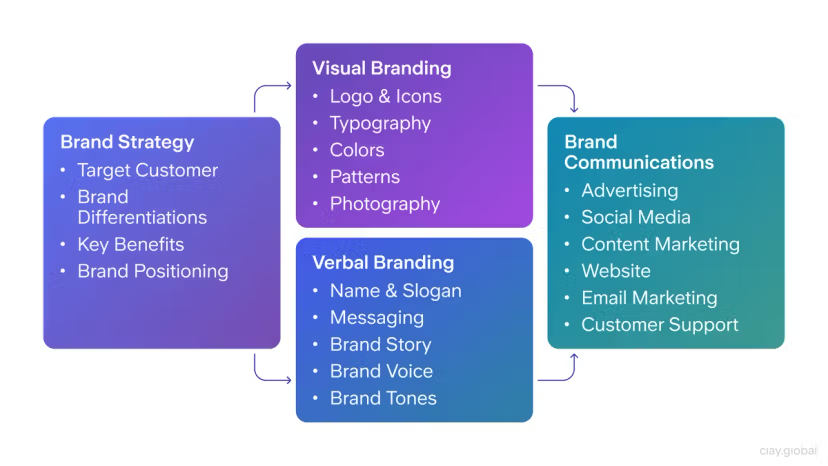
A powerful brand strategy is built on several essential components that work together to create a complete brand ecosystem.
The first and most important element is understanding the audience. Brands cannot create meaningful connections without knowing who they are speaking to. Customer research helps companies understand motivations, challenges, expectations, behaviors, and emotional needs.
Successful brands do not simply ask, “What can we sell?” They ask, “How can we improve people’s lives?”
This shift in perspective changes everything. It moves branding away from product-focused communication and toward customer-focused experiences.
Another fundamental element is differentiation. Every industry has competition, and businesses need a clear reason why customers should choose them. A strong brand strategy identifies what makes a company unique and transforms those differences into a compelling message.
Differentiation can come from many areas: innovative products, exceptional service, company values, unique design, customer experience, or a powerful mission.
For example, two companies may offer similar products but create completely different perceptions. One may compete through affordability and convenience, while another may focus on premium quality and exclusivity. The difference lies not only in the product itself but in the story and experience surrounding it.
A successful brand strategy must also remain flexible. Markets change, technologies evolve, and customer expectations constantly shift. Brands that refuse to adapt often become irrelevant.
The strongest companies preserve their core identity while finding new ways to stay connected with changing audiences.
Brand Purpose: Creating Meaning Beyond Profit
Modern consumers increasingly expect brands to stand for something. A company’s purpose explains why it exists beyond generating revenue.
Brand purpose is the deeper reason behind a business. It reflects the positive impact a company wants to create and the values it wants to represent.
For some brands, purpose may focus on sustainability and environmental responsibility. For others, it may involve improving accessibility, supporting communities, creating better technology, or changing outdated industries.
A meaningful purpose helps businesses create stronger emotional connections because customers feel they are supporting something larger than a simple transaction.
However, authenticity is critical. Consumers quickly recognize when companies use values only as marketing tools. A brand purpose must influence real decisions, company culture, product development, and customer relationships.
When purpose is genuinely integrated into a business, it becomes a powerful guide for growth and decision-making.